



How to Scale Lead Generation Without Losing Quality
By Ray Advertising · Published August 17, 2026
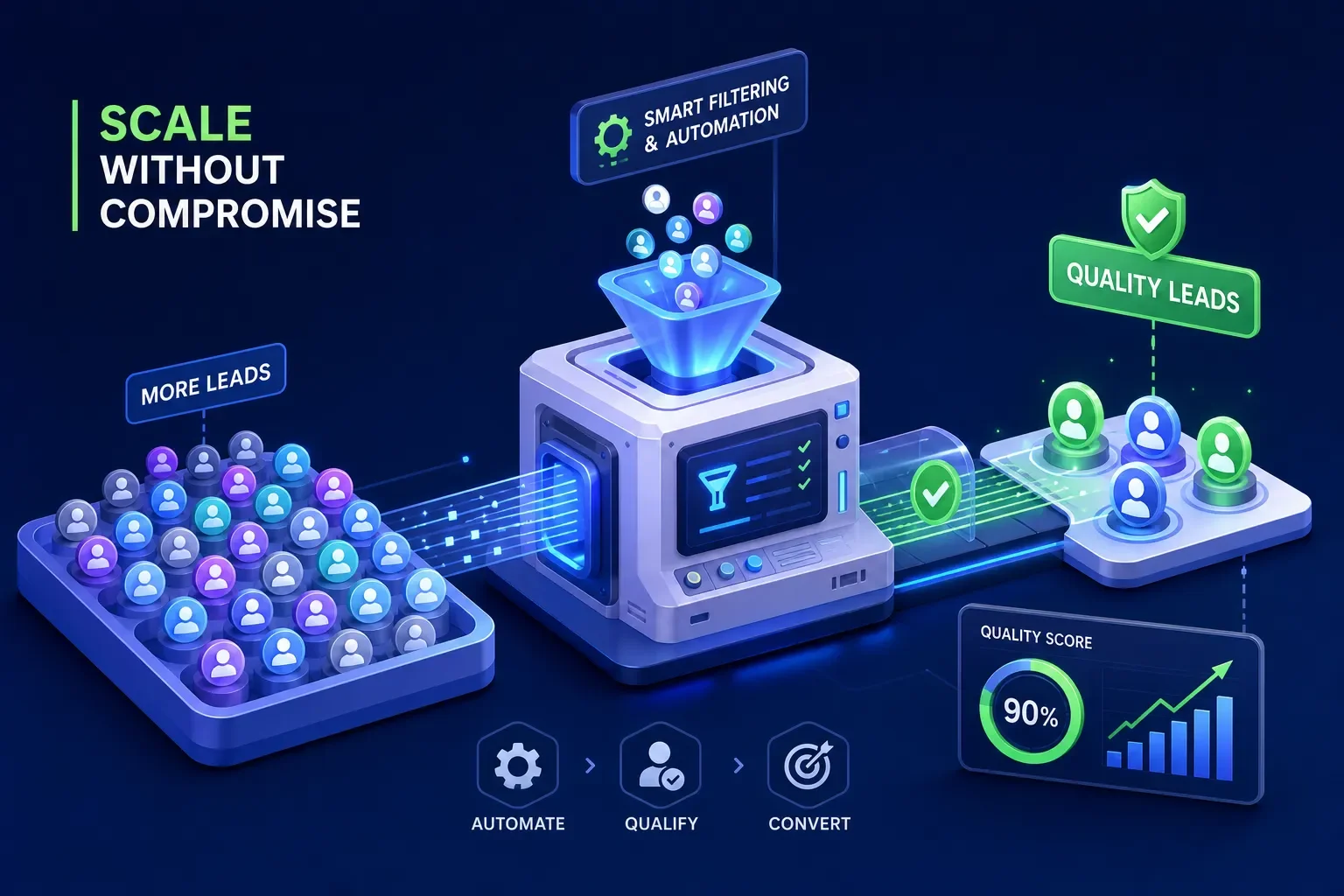
How to Scale Lead Generation Without Losing Quality
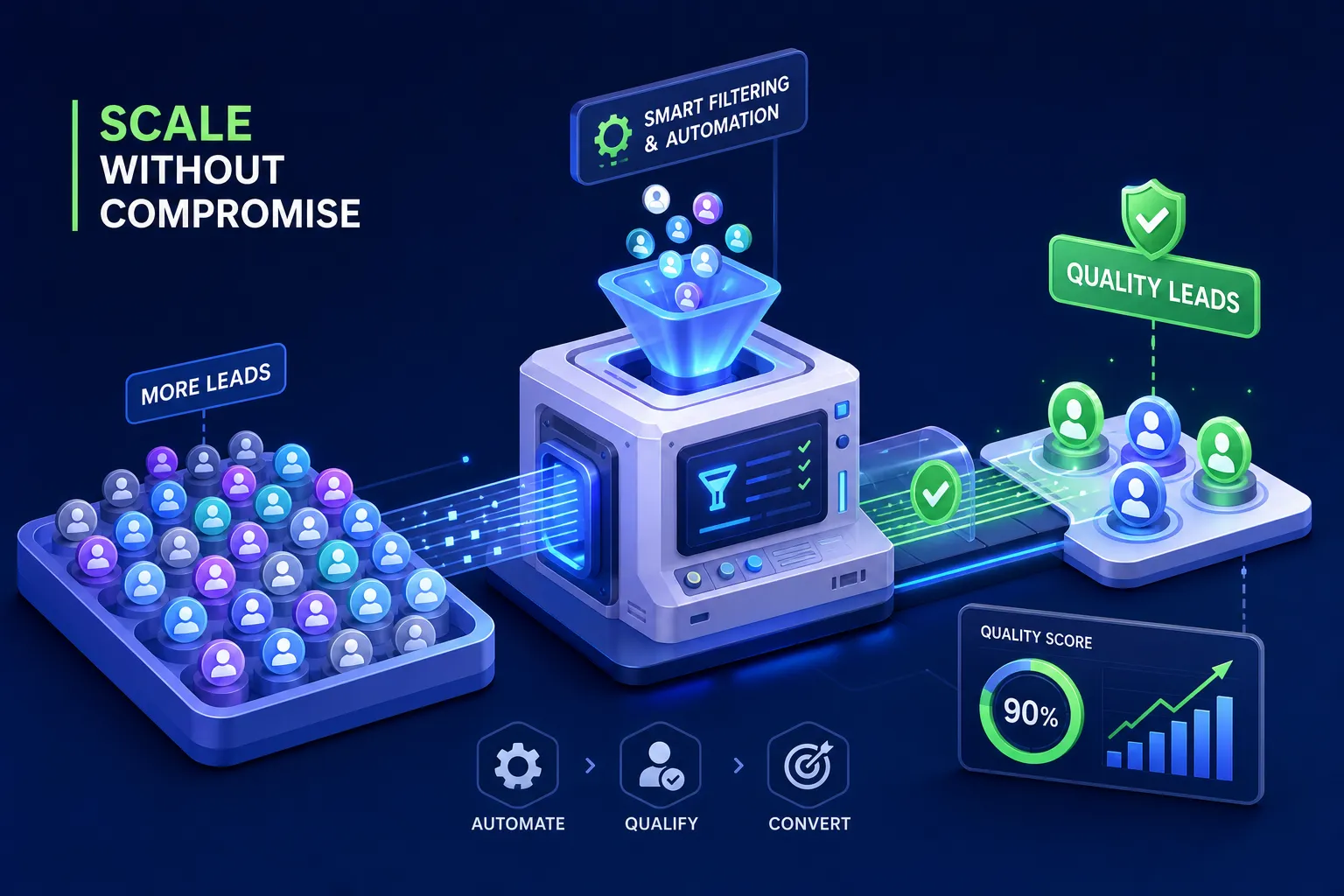
How do I scale my lead generation without sacrificing quality? It's one of the most common questions growth-focused B2B teams ask, and one of the most misunderstood. Most businesses treat scaling and lead quality as a zero-sum trade. Push for more volume, and conversion rates suffer. Protect quality, and growth stalls. That framing is wrong, but it only stops being a problem when you build the right infrastructure, ICP alignment, lead scoring, data verification, capacity planning, quality checkpoints, real-time monitoring, automation, and sales-marketing alignment, before you turn up the volume.
The stakes are real. B2B lead-to-customer conversion rates typically sit around 1, 3%, and that number collapses fast when volume increases without guardrails. A business that doubles its paid media budget without a qualification system in place doesn't generate twice the revenue; it generates twice the noise. Performance-focused agencies like Ray Advertising have developed approaches to this problem at scale using AI-driven optimization, real-time quality controls, and fraud prevention. The principles behind that approach are replicable, and this eight-step framework walks you through exactly how to apply them.
Why lead quality degrades when you scale too fast
The three root causes that destroy conversion rates
Scaling breaks quality through three predictable failure points: capacity overload on the sales team, no scoring system to filter incoming leads, and poor data hygiene that lets junk records flood your CRM. Each one compounds the others. When reps are overloaded, they cherry-pick leads and drop follow-up. When scoring is absent, every inbound record looks equally worth pursuing. When your CRM is full of bad data, even the qualified leads get lost in the noise.
Here's a concrete scenario: a business doubles its paid media budget, inbound volume triples, and MQL-to-SQL conversion drops from 12% to 6% within 30 days. That drop likely didn't happen because the leads got worse. A common cause is the team's capacity to evaluate and follow up staying flat while the queue doubled. Speed-to-lead SLAs slipped, reps stopped working mid-funnel leads, and the pipeline filled with contacts that were never properly qualified in the first place.
What the data reveals about unchecked volume growth
B2B lead-to-opportunity rates typically range from 8, 15%, but unchecked scaling without a qualification infrastructure pushes teams well below that floor quickly. The misleading signal most teams watch is cost per lead. That number can look great while the pipeline rots, because CPL says nothing about whether the leads you're generating can actually buy.
What actually matters is cost per qualified opportunity and downstream conversion rate. Those two metrics tell you whether scaling is working or just producing a larger, more expensive problem. The eight steps below are designed to protect those numbers as volume grows, and to answer, practically, how you scale lead generation without sacrificing quality at any point in the process.
How do I scale my lead generation without sacrificing quality: Steps 1, 3
Step 1. Sharpen your ICP targeting before touching ad spend
ICP alignment means more than picking an industry. It means defining the exact company size, geography, buying role, and behavioral triggers that predict a closed deal. The tighter your ICP definition, the higher the percentage of volume that converts, even when raw numbers increase significantly. Campaigns that narrowed ICP targeting alongside scaling have achieved 3x more qualified leads with a 10% improvement in conversion rates, precisely because they stopped generating volume that couldn't convert. (This pattern aligns with case study data from ICP-focused lead generation programs.)
Before you increase a single budget line, pull your last 12 months of closed-won deals and identify the firmographic and behavioral patterns they share. That profile becomes your targeting filter for every channel you scale. This step alone is foundational to any plan to increase lead volume without losing quality downstream.
Step 2. Create a lead scoring model built on intent signals
A practical scoring framework runs across three buckets: firmographic fit, behavioral engagement, and intent signals. Firmographic fit covers job title, company size, and industry match. Behavioral signals include demo requests, pricing-page visits, and content downloads. Intent signals are the strongest predictors: call transcript keywords referencing budget or timeline, repeat high-intent page visits, and named-account visitor identification.
Sample point values that work well in practice: demo request (+20), pricing-page visit (+15 to +25), VP or C-level title (+10 to +25), careers-page visit (−10), and personal email domain (−10). Set your MQL threshold at 50, 60 points and your SQL threshold at 75, 90 points, then test those benchmarks against historical conversion data and adjust from there. A scoring model that isn't calibrated to your actual pipeline is just guesswork with extra steps. Lead qualification at scale depends on getting these thresholds right before volume increases.
Step 3. Verify and clean lead data before it enters your CRM
Data hygiene isn't a cleanup task, it's a scaling prerequisite. One documented case showed email bounce rates dropping from 19% to 2.1% and reply rates jumping from 1.8% to 6.4% after implementing lead verification and ICP-based sourcing (NorthPeak case study). That's not a minor improvement. That's the difference between a campaign that scales and one that floods your CRM with dead records.
Lead verification tools handle email validation, firmographic enrichment, duplicate detection, and domain-type filtering. Tools like Apollo, ZoomInfo, and Skrapp all handle the core use case. When evaluating options, look for real-time validation at the point of capture, enrichment depth for your target firmographics, and native CRM integration. The specific tool matters less than the discipline of verifying leads before they enter your CRM, not after.
Steps 4, 5: Capacity planning and quality control checkpoints
Step 4. Map your team's capacity limits before scaling volume
Capacity planning in this context means one thing: the maximum number of leads a sales rep or queue can handle before response time degrades and speed-to-lead SLAs slip. When reps are overloaded, they default to cherry-picking the easiest leads, follow-up drops across the rest of the pipeline, and quality suffers even when incoming leads are strong.
A practical planning model works like this: calculate average rep follow-up capacity per day, set overflow routing rules that trigger at a defined threshold, and build in auto-response triggers for every lead that enters the queue. If your demand is running at 1.2x your actual sales capacity, that's a manageable runway. If it hits 2x without a routing plan, quality will erode regardless of how well your leads score.
Step 5. Install quality checkpoints at every pipeline stage
Checkpoints are structured review gates: an MQL acceptance review before SQL assignment, post-call disposition tagging, and a weekly lead source quality audit. They're not just about filtering bad leads. Every rejection generates feedback data that improves upstream targeting over time. A disposition tag that says "wrong company size" tells your media buyers to tighten a demographic filter. That feedback loop is where scaling compounds in your favor rather than against you.
Track these KPIs at each checkpoint: lead acceptance rate, contact rate, stage-to-stage conversion, and disqualification reason by source. If you're not capturing disqualification reasons, you're leaving half the value of your checkpoints on the table.
How do I scale my lead generation without sacrificing quality: Steps 6, 8
Step 6. Set up real-time dashboards to catch quality drops before they compound
Weekly reporting is too slow when you're scaling. A conversion rate drop that takes a week to surface could mean thousands of unqualified leads and a blown budget before anyone notices. Real-time monitoring gives you the ability to catch a quality signal degrading and adjust the same day, not at next month's review.
Your real-time dashboard should track cost per qualified lead, MQL-to-SQL conversion rate, lead acceptance rate by source, and call quality scores for inbound campaigns. AI-powered analytics platforms can surface anomalies automatically, flagging when a specific source or campaign starts underperforming before the trend becomes a budget problem. Look for platforms with configurable alerting thresholds, statistical anomaly detection, and campaign-level drilldowns so you can act on signals before they compound.
Step 7. Use marketing automation to route, filter, and nurture at speed
Automation handles what humans can't at scale: instant lead routing to the right rep based on score and geography, automated disqualification of leads below threshold, and multi-touch nurture sequences for mid-funnel leads not yet ready to convert. Several platforms cover this well at different price points. HubSpot Marketing Hub Pro runs around $890/month, ActiveCampaign starts at roughly $15/month, and Zapier handles workflow orchestration for around $20/month, though pricing varies by billing cycle and feature tier, so verify current rates before budgeting. The right tool depends on your volume and stack; the principle is the same across all of them.
Automation's job is to protect quality, not just accelerate speed. It removes the human bottlenecks that let low-quality records slip through when reps are under pressure to clear a queue.
Step 8: Align sales and marketing on shared quality standards
The SLA structure that prevents quality from slipping under volume
A marketing-to-sales SLA needs four explicit components when you're scaling: agreed MQL and SQL definitions, a first-human-touch response time commitment, a follow-up cadence with defined channels and spacing, and clear rejection and recycling rules. Without all four, the SLA creates accountability on volume but not on quality, and volume without quality is exactly the problem you're trying to solve.
The mutual accountability structure matters here. Marketing is held to MQL-to-SQL conversion rate, not just lead count. Sales is held to response time and follow-up completion rate. When both teams have downstream metrics in their commitments, the incentive to inflate volume at the expense of quality disappears.
Closed-loop reporting when lead volume increases
Closed-loop feedback is critical at scale because sales needs to report disposition outcomes back to marketing so poor-performing lead sources get cut quickly. Monthly reviews aren't fast enough. If a campaign is generating high volume and low acceptance rates, that signal needs to travel back to your targeting and creative decisions within days, not weeks.
The feedback loop should include disqualification reasons by source, contact rate by campaign, and conversion rate by persona and channel. In one documented NorthPeak case study, building this closed-loop structure contributed to cost per meeting dropping from $310 to $74 while qualifying pipeline volume tripled, not by generating more leads, but by ruthlessly cutting the sources that weren't producing pipeline.
How Ray Advertising scales campaigns without quality degradation
AI-powered recommendations that optimize in real time
Ray Advertising's analytics platform uses AI-powered recommendations to adjust campaign targeting and allocation dynamically. The system is designed to surface where quality is slipping before a human reviewer would catch it in a report. When running high-volume pay-per-call campaigns or lead generation across multiple verticals, that real-time optimization helps maintain conversion rate stability as volume grows.
Streamlined campaign onboarding and real-time call routing are designed to reduce the lag that typically causes quality to erode during scale-up phases, the transition window where most advertisers lose ground.
Built-in fraud detection as a scaling guardrail
As volume increases, so does the risk of invalid traffic, recycled leads, and low-intent contacts inflating raw numbers without delivering qualified pipeline. Fraud prevention isn't optional at scale, it's structural. Ray Advertising focuses on filtering invalid traffic, maintaining call quality standards, and blocking bad actors before they reach the advertiser's queue.
That focus on lead source integrity, including an emphasis on exclusive lead inventory with demographic filtering rather than shared data resold across buyers, is what differentiates a performance-grade lead generation partner from a standard aggregator. When you're scaling, the integrity of the lead source determines the integrity of your pipeline.
Scale with a system, not just a budget
The eight steps work as a system: ICP alignment, lead scoring, data verification, capacity planning, quality checkpoints, real-time monitoring, automation, and sales-marketing alignment. Skip one and the others carry less weight. Build all eight and you have a repeatable answer to the question every growth team faces, how do I scale my lead generation without sacrificing quality, rather than a gamble on whether volume produces pipeline.
Scaling lead generation without sacrificing quality is not about doing more. It's about building infrastructure that protects conversion rates as volume grows. The companies that double qualified pipeline without doubling cost per acquisition share one common trait: they built the qualification layer before they touched the budget. That's how you reduce cost per lead while maintaining quality, and how you achieve true lead qualification at scale.
If you want a partner that has operationalized these layers, from AI-driven real-time optimization to fraud detection and exclusive lead generation, Ray Advertising is built for advertisers who need to scale fast without sacrificing lead quality. The infrastructure is already in place. The only question is whether your campaigns are running on top of it.
Recent Post
How to Scale Lead Generation Without Losing Qualit...
August 17, 2026
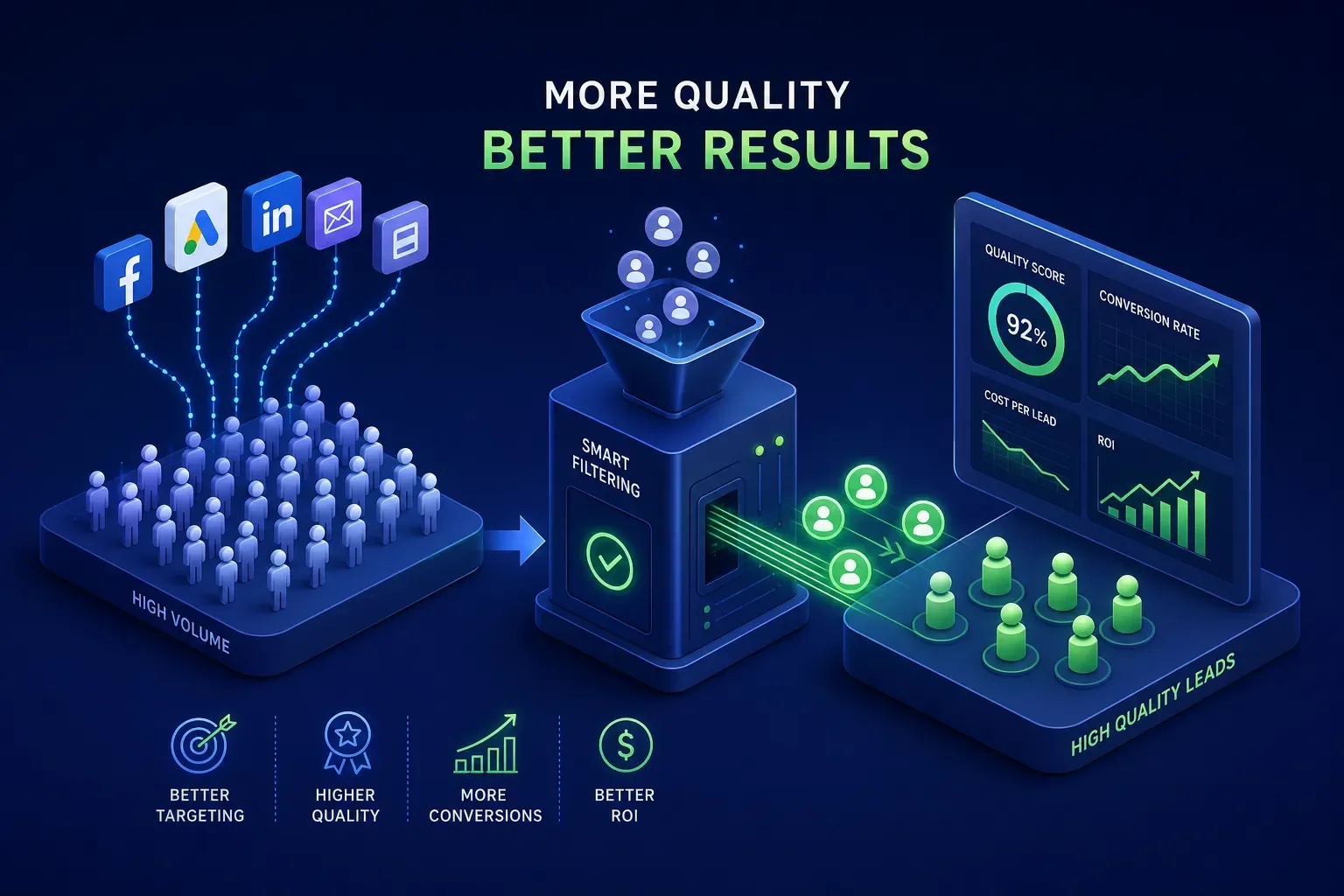
Improve Lead Generation Quality Without Losing Vol...
August 16, 2026
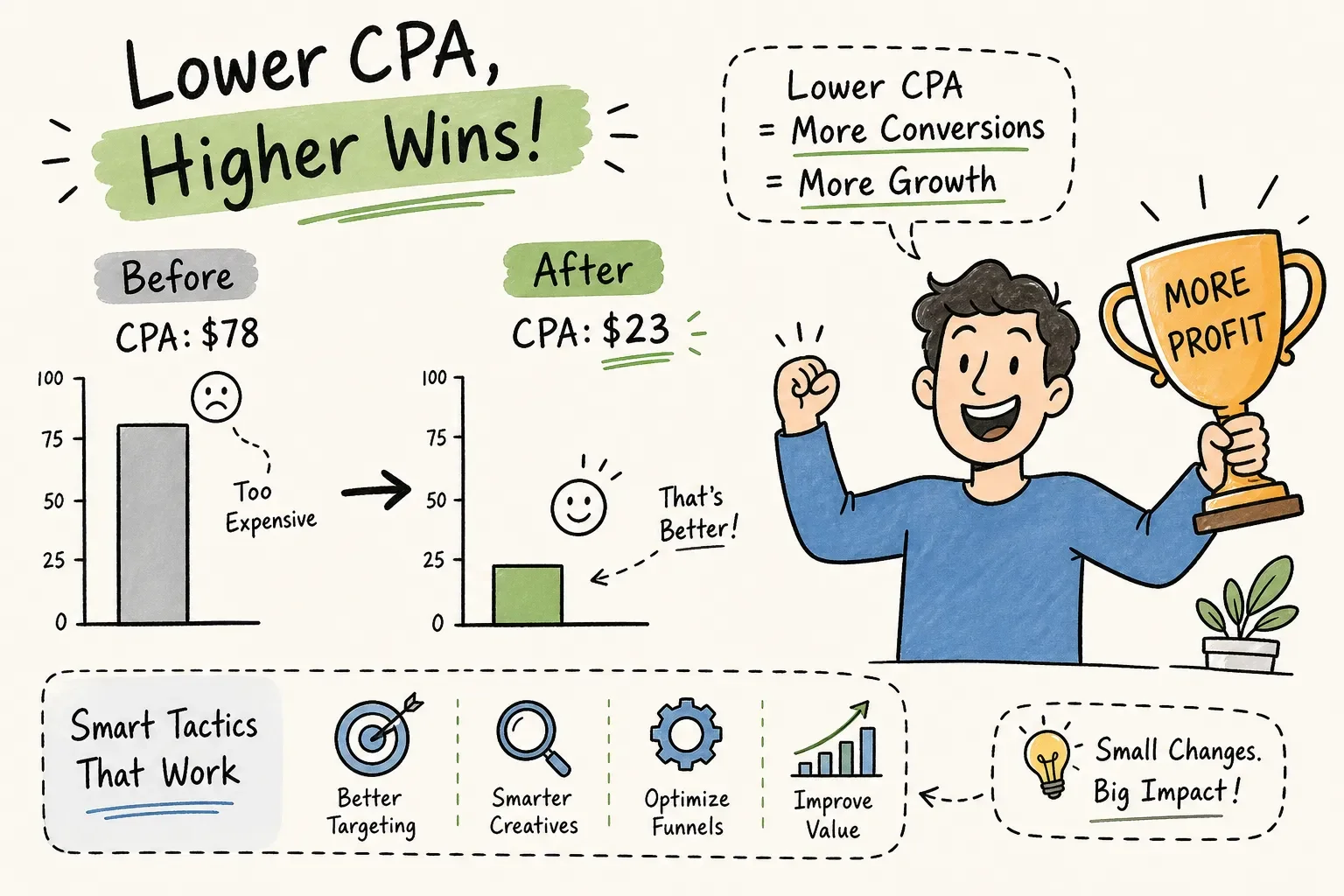
Reduce Cost Per Acquisition: 12 Tactics That Work...
August 14, 2026
Reduce Cost Per Acquisition: 12 Tactics That Work...
August 13, 2026
Car Insurance Leads for Agents: Best Sources and S...
August 12, 2026
What Are SR22 Insurance Leads and Why Are They So ...
August 11, 2026
Auto Insurance Pay Per Call: How It Works and Why ...
August 10, 2026
How to Buy Auto Insurance Leads That Actually Conv...
August 9, 2026
High Risk Auto Insurance Leads: How to Target and ...
August 8, 2026
Related resources
Explore the most relevant pages based on this article.
- Contact Ray Advertising — Ask about pricing, compliance, and launch timelines.
- Lead Generation — High-intent leads with delivery and quality controls.
- Pay Per Call — Qualified inbound calls with tracking and routing.
- Media Buying — Performance media with optimization and attribution.
- Affiliate Network — Vetted publishers and fraud protection.

FAQs
Quick answers related to this article.
We support lead generation, pay per call marketing, media buying, and affiliate network programs.
We use source attribution, quality metrics, and conversion reporting to optimize and scale profitable traffic.
Contact our team or sign up as an advertiser or publisher to begin onboarding.