



High Risk Auto Insurance Leads: How to Target and Convert Them
By Ray Advertising · Published August 2, 2026
High Risk Auto Insurance Leads: How to Target and Convert Them
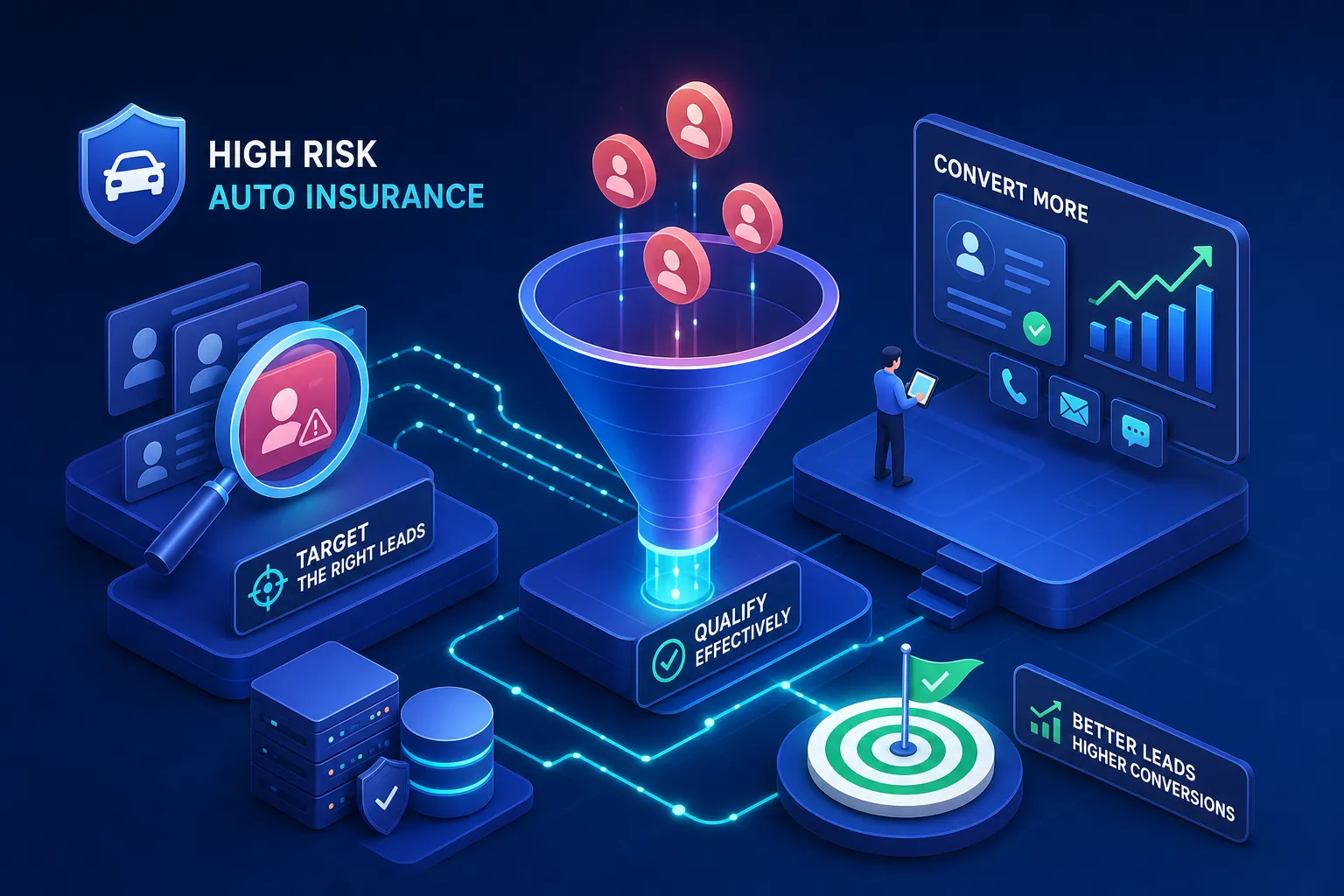
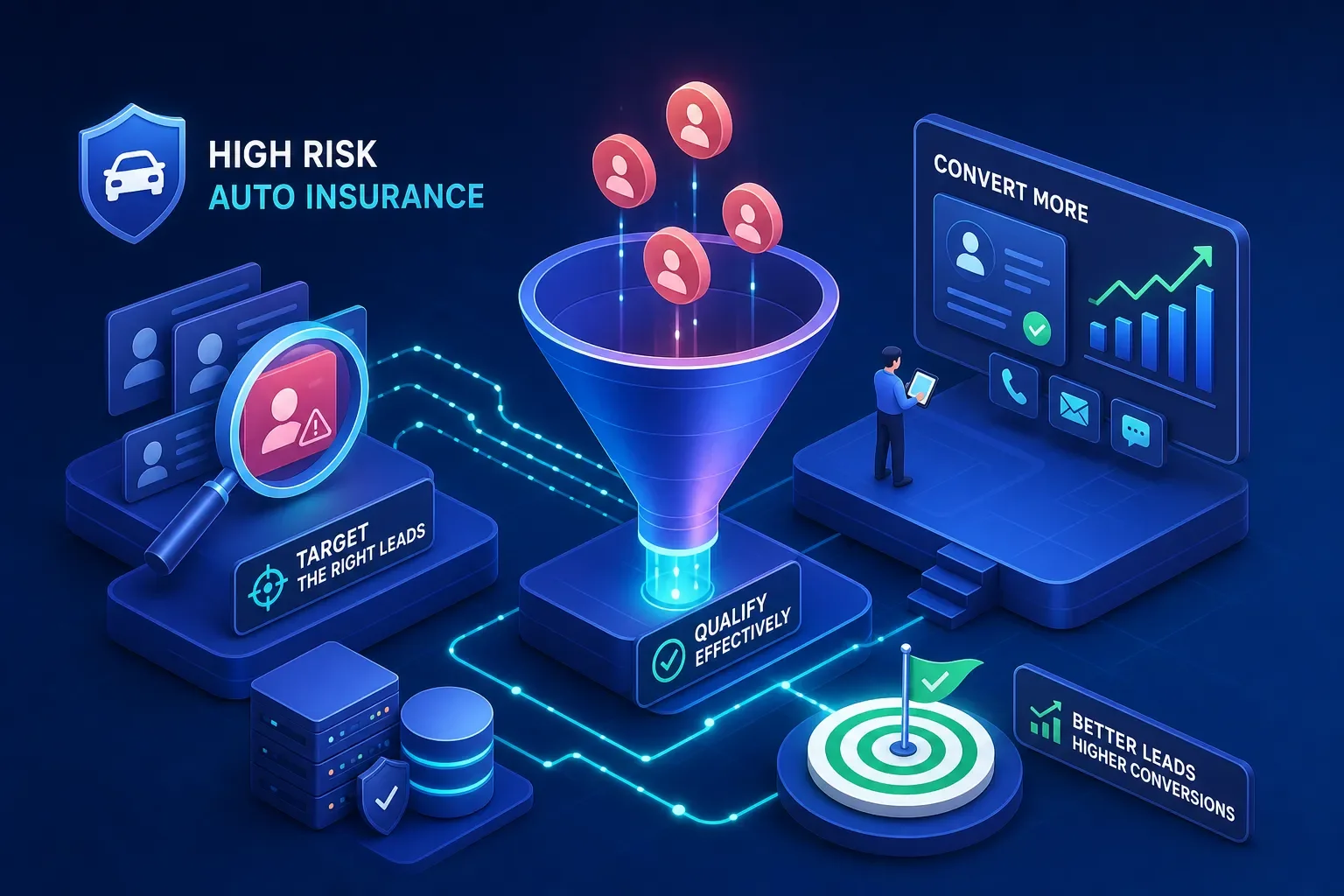
Most agents write off the high-risk auto segment before they ever test it, and the high risk auto insurance leads that segment produces never get a fair evaluation. The assumption is that these drivers are difficult to place, hard to reach, and unlikely to close. That assumption is wrong, and it's costing agents a significant revenue opportunity. High risk auto insurance leads often carry stronger purchase intent than any standard driver shopping for a better rate, because many of these consumers aren't browsing. They're required to have coverage.
At Ray Advertising, we've run pay-per-call and lead generation campaigns across the auto insurance vertical long enough to see this pattern repeat: agents who approach the high-risk segment with the right acquisition model and filtering strategy consistently outperform those chasing standard auto shoppers in a more crowded market. This guide covers who qualifies as a high-risk driver, why their intent is unusually strong, which acquisition channels produce the best return, and how to filter your campaigns for specific risk profiles before you scale spend.
Who qualifies as a high-risk driver in auto insurance
Non-standard auto isn't a vague category. Carriers use specific behavioral and record-based criteria to classify drivers, and understanding those criteria is what allows you to filter high risk auto insurance leads precisely before spending a dollar on acquisition. The clearer your targeting, the less budget you waste on drivers your carrier won't write.
The main risk categories carriers flag
The primary classifications include DUI or DWI convictions (typically within the past three to five years), multiple at-fault accidents, serious moving violations like reckless driving, SR-22 or FR-44 filing requirements, lapsed or canceled coverage for 30 or more days, and new or teen drivers with no prior history.
Each of these triggers a different carrier response: rate surcharges, non-renewal notices, or outright placement in the non-standard market. Most traffic violations and accidents affect rates for three to five years, while more serious offenses like DUIs and SR-22-triggering events can remain relevant for five years or longer depending on the state.
Why carriers push these drivers to the non-standard market
Standard and preferred carriers have underwriting guidelines that exclude many high-risk profiles entirely. A driver with a recent DUI or multiple at-fault accidents often can't get coverage from preferred carriers at any price. They're shopping within a narrower pool of non-standard providers, which changes the competitive dynamics significantly. For agents licensed to write non-standard auto, this means less competition for each lead and a buyer who genuinely needs to find coverage fast.
Why high risk auto insurance leads carry stronger purchase intent than standard shoppers
The standard auto shopper is comparison shopping. They already have coverage and they're looking to save $20 a month. The high-risk driver is often in a completely different situation. Many of them need coverage to reinstate their license, satisfy a court requirement, or avoid compounding legal consequences. That urgency converts differently.
Legal and court-mandated urgency
SR-22 requirements are the clearest example. When a driver is ordered to file an SR-22, they have a defined window to obtain coverage and submit proof to the DMV. There's no "I'll think about it." The decision to buy is already made before they ever contact an agent. Their only question is which carrier will write them and at what price. The same logic applies to license reinstatement after a DUI or suspension: the driver isn't evaluating whether to buy insurance, they're looking for who can get them covered today.
Lapsed coverage as a re-entry trigger
Drivers with recently lapsed coverage are in an equally urgent position. Their current carrier dropped them or raised their rates sharply, and they're actively shopping for a replacement policy with a hard deadline tied to vehicle registration, a lender requirement, or state law. These aren't passive browsing leads. They're already in a buying cycle. That urgency is what separates non-standard auto leads from standard comparison shoppers who are happy to take two weeks to decide.
Pay-per-call vs. pay-per-lead for high risk auto insurance leads
Both acquisition models work for high-risk auto, but they serve different agency structures. The right choice depends on your team's follow-up capacity, your close process, and how quickly you can quote a non-standard risk. Getting this decision right before you commit budget is the difference between a profitable test and a frustrating one.
Pay-per-call benchmarks and what to expect
Pay-per-call for auto insurance typically runs $30 to $60 per qualified inbound call, with premium live-transfer pricing reaching $45 to $120 depending on the vendor and targeting specificity. For the high-risk segment, the call carries more value because the driver is already engaged and the agent can quote in real time. Quality call signals are consistent across vendors: duration above two minutes, intent verification confirming the caller understands they need non-standard coverage, and a verified phone number matched to the stated location. A connected, intent-verified call in this segment closes at a materially higher rate than a cold web form submission, often in the 15 to 25 percent range for experienced agents.
Filtering high risk auto insurance leads by SR-22 and lapse history
Shared non-standard auto leads typically price between $3 and $15. Exclusive real-time web leads for the same segment run $20 to $30 from most vendors. Speed-to-contact matters more in this segment than in standard auto, a shared lead going to three to five competing agents loses its urgency within the first few minutes. Filtering for SR-22 flags and prior lapse history at the campaign level ensures your budget reaches drivers who are actively in-market, not general auto shoppers who happen to match a ZIP code.
Exclusive vs. shared leads: what the conversion data shows about ROI
Cost-per-lead is a starting point, not the metric that actually tells you whether a campaign is working. The number that matters is cost-per-bound-policy, and building that model before you buy a single lead will save you from making the wrong channel decision based on surface-level pricing.
The conversion rate gap between exclusive and shared leads
Exclusive real-time leads in the auto insurance space convert at approximately 8 to 15 percent overall. Shared leads typically convert at 2 to 8 percent. For non-standard auto specifically, that gap widens because high-risk shoppers act quickly when they find a carrier willing to write them. A shared lead distributed to multiple agents loses its value almost immediately, the first agent to call gets the sale, and everyone else gets a voicemail or a "I already found someone." An exclusive lead delivered in real time keeps the urgency intact and gives a single agent the full opportunity.
Building a simple cost-per-sale model before you buy
Run two scenarios side by side before committing to a vendor. Scenario A: shared lead at $10, 4 percent conversion rate, that's a $250 cost per bound policy. Scenario B: exclusive lead at $25, 12 percent conversion rate, cost per bound policy drops to roughly $208. The exclusive lead costs 2.5 times more per lead and still produces a lower cost per sale, assuming your team responds within minutes. Aged leads (30 to 90 days old) are a different calculation entirely: conversion typically falls to 1 to 5 percent and aged leads are only viable with a dedicated re-engagement workflow, low-cost labor, and the patience to run multi-touch follow-up sequences over several weeks.
Filtering your campaigns to reach specific high-risk driver profiles
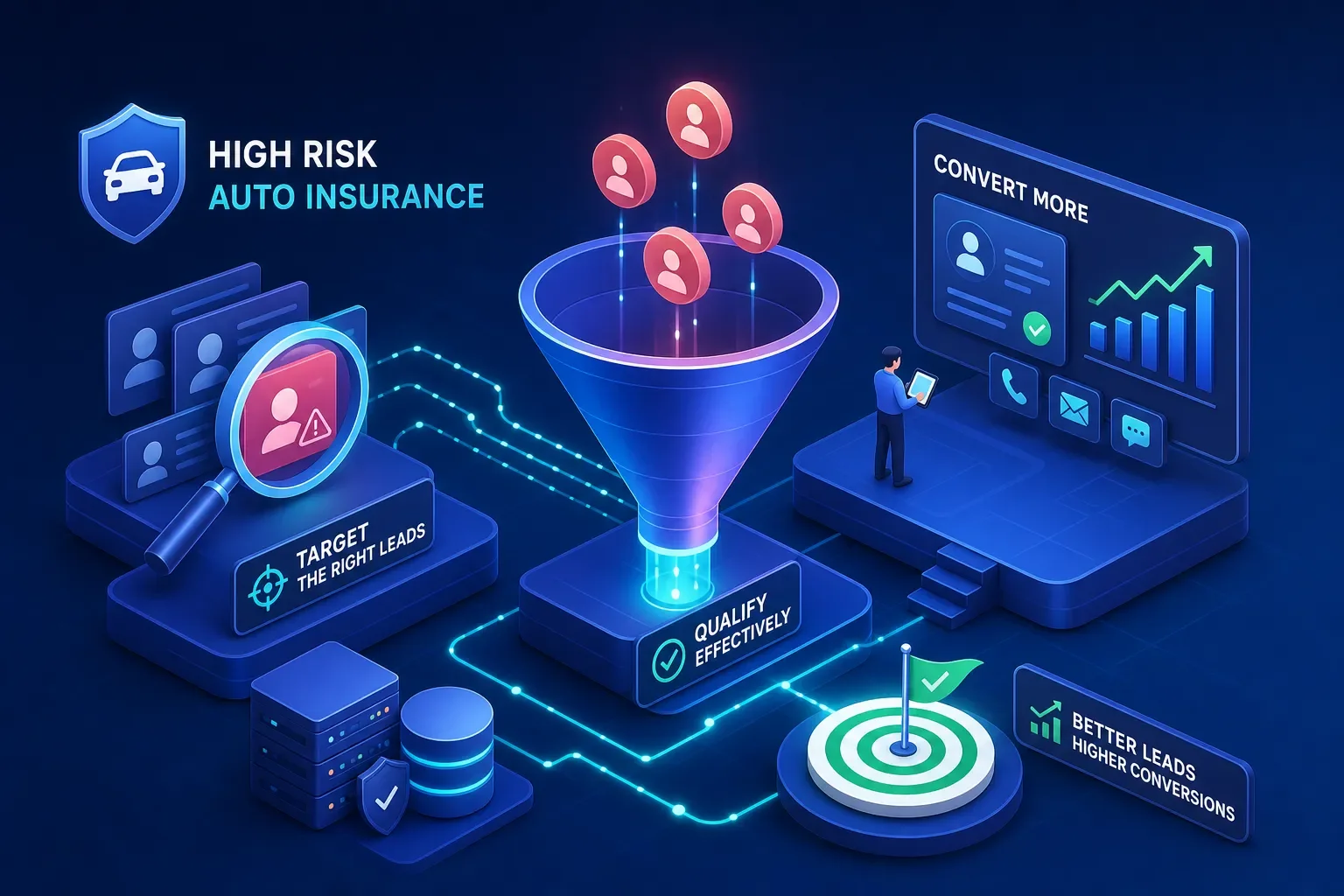
The cost-per-sale model above only holds when your campaigns are pulling the right leads to begin with. Buying generic auto insurance leads and hoping some turn out to be high-risk is an expensive way to generate mediocre results. Agents and agencies that build profitable campaigns in this segment filter for specific driver profiles from the start. Precision at the campaign level is what separates a break-even spend from a consistently profitable one.
Filters that matter most for non-standard auto targeting
The highest-value filters for this segment are state and ZIP code targeting aligned to your carrier's licensing footprint, coverage type filtering for SR-22 and non-standard placements, driving history proxies where available, prior insurance status, and vehicle type. State-level targeting is non-negotiable. Non-standard market availability varies significantly by geography, and carriers are licensed state by state. Routing a Texas SR-22 lead to an agent licensed only in Florida is a wasted lead for everyone involved.
The full filter list agents should verify with any vendor before onboarding includes:
- State and ZIP targeting aligned to carrier licensing
- Coverage type selection (SR-22, non-standard, liability-only)
- Prior insurance lapse history flags
- Real-time delivery with timestamp verification
- Duplicate suppression and DNC scrubbing
How purpose-built platforms let you go deeper than demographics
Standard lead platforms filter by age and ZIP code. Platforms built specifically for performance marketers in the insurance vertical go further. At Ray Advertising, our lead generation and pay-per-call campaigns offer custom filtering controls that target non-standard driver profiles specifically: coverage type, prior lapse history, SR-22 flags, and state-specific routing. That targeting depth means your budget reaches drivers who qualify with your carrier network, not just auto insurance shoppers in general. For agents running consistent volume, filter depth is often the single factor that determines whether a campaign is profitable or not.
Compliance checklist before you buy a single lead
TCPA enforcement has made lead buying expensive for agents who skip vendor vetting. A single documented complaint from a consumer who didn't consent properly can produce liability that dwarfs whatever you saved on CPL. Before you commit budget to any vendor, verify their consent standards against a clear checklist.
What TCPA-compliant consent documentation looks like
Compliant auto insurance lead vendors should provide, for each lead: one-to-one consent language naming your company specifically rather than a broad "marketing partners" clause, an unchecked affirmative opt-in box, a timestamp and IP address captured at consent, the exact form copy shown to the consumer, and a TrustedForm or equivalent certificate. If a vendor cannot produce all of these items on request, the leads carry legal risk that outweighs any savings on CPL. The current compliance environment, shaped by one-to-one consent rule enforcement and growing class action exposure under TCPA, makes documentation of the consent moment essential, not optional.
Questions to ask every vendor before onboarding
Vet every vendor with the same set of questions before signing anything. How is consent captured? Can you provide a sample TrustedForm certificate? Are leads scrubbed against DNC lists before delivery? What is your policy if a consumer disputes consent? How old is the lead at delivery? Do you offer returns on uncontactable leads? Getting direct, documented answers to these questions protects your compliance posture and your campaign economics. Any vendor that hedges on consent documentation or can't produce a sample certificate is telling you something important about their operation.
Build a test before you scale
High risk auto insurance leads are not the difficult segment most agents assume. When you understand who qualifies, why their intent is strong, and how to match your acquisition channel and filtering to specific driver profiles, this segment performs consistently. The data supports exclusive real-time leads and inbound pay-per-call as the two models with the strongest ROI for non-standard auto, particularly when campaigns are filtered for SR-22 requirements, lapse history, and specific risk profiles rather than general auto shoppers.
Start with a defined test budget. Run exclusive auto insurance leads and pay-per-call in parallel for 30 days. Measure cost-per-bound-policy on each channel, not cost-per-lead. Scale the channel that wins. If you want campaigns filtered specifically for non-standard and high-risk driver profiles from day one, with real-time delivery, SR-22 targeting, and state-specific routing already built in, working with a performance marketing partner built for the insurance vertical removes the trial-and-error phase entirely. That's exactly what Ray Advertising is set up to do.
Recent Post
How to Scale Lead Generation Without Losing Qualit...
August 17, 2026
Improve Lead Generation Quality Without Losing Vol...
August 16, 2026
Reduce Cost Per Acquisition: 12 Tactics That Work...
August 14, 2026
Reduce Cost Per Acquisition: 12 Tactics That Work...
August 13, 2026
Car Insurance Leads for Agents: Best Sources and S...
August 12, 2026
What Are SR22 Insurance Leads and Why Are They So ...
August 11, 2026
Auto Insurance Pay Per Call: How It Works and Why ...
August 10, 2026
How to Buy Auto Insurance Leads That Actually Conv...
August 9, 2026
High Risk Auto Insurance Leads: How to Target and ...
August 8, 2026
Related resources
Explore the most relevant pages based on this article.
- Contact Ray Advertising — Ask about pricing, compliance, and launch timelines.
- Lead Generation — High-intent leads with delivery and quality controls.
- Pay Per Call — Qualified inbound calls with tracking and routing.
- Media Buying — Performance media with optimization and attribution.
- Affiliate Network — Vetted publishers and fraud protection.

FAQs
Quick answers related to this article.
We support lead generation, pay per call marketing, media buying, and affiliate network programs.
We use source attribution, quality metrics, and conversion reporting to optimize and scale profitable traffic.
Contact our team or sign up as an advertiser or publisher to begin onboarding.